
APPLICATION GUIDE
Mine & Land Rehabilitation
Turn treatment zones, substrate constraints, water logistics and acceptance tests into an equipment brief.
- Work context
- Mine, oilfield and disturbed-land restoration
- Equipment input
- Site and material specification
- Evidence
- Documented use case; no measured project result
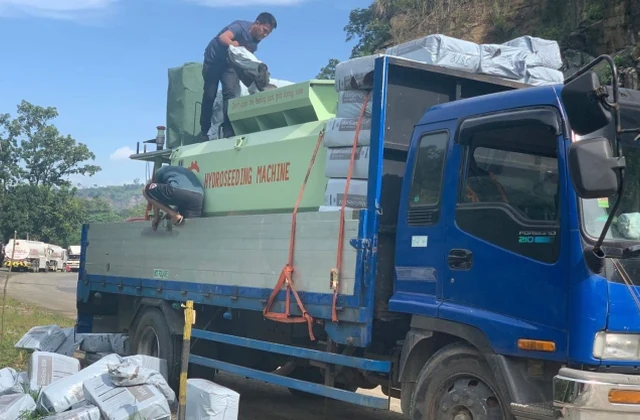
Illustrative supplied worksite image. No customer, location or application-specific result is attributed.
Define the treatment problem
Define the rehabilitation objective and split the site into treatment zones. Record substrate condition, slope geometry and access before comparing tank capacities.
Review equipment fit
Use the specified mixture and delivery route to review agitation, pump flow and pressure, usable tank capacity and operating cycle. The supplied article explains why nominal tank volume alone is insufficient.
Site and operating constraints
Remote water supply, long travel between refill points, elevation changes and variable substrates require an explicit site plan. Material compatibility and acceptance tests must be agreed for the actual project.
Prepare an equipment brief
- Treatment-zone area, slope geometry and rehabilitation objective
- Specified seed, fibre, amendments and slurry formulation
- Water availability, refill cycle and expected working hours
Why the complete brief matters
Tank size is one selection input. The intended material, pump duty, refill cycle and delivery route must be reviewed together. Catalogue values do not demonstrate performance under every site condition.
Plan the review and verification
- Document zone areas, access and the treatment recipe with the rehabilitation team.
- Estimate operating cycles using usable batch volume, refill and travel assumptions.
- Ask suppliers to demonstrate the intended mixture under agreed practical test conditions.
- Keep equipment acceptance separate from later revegetation performance monitoring.
Available evidence
The supplied product overview lists this application. Model-specific tables support equipment comparison. The worksite photographs provide visual context without customer attribution or measured outcomes.
Project-specific limits
The supplied worksite photograph is illustrative; no mine, customer, location or measured rehabilitation outcome is attributed to it. No project reference is claimed.